



Browsing Category
Microsoft Defender XDR
28 posts
Microsoft Defender XDR brings together signals across identity, endpoint, email, and cloud. This category focuses on cross-domain detection, correlation, and incident response.
The articles explore how incidents are built, how alerts relate to each other, and how XDR improves investigation efficiency. Emphasis is placed on understanding detection context, not just responding to alerts.
This category is core to SOC operations and advanced detection engineering.

Microsoft Defender for Cloud Apps: AI agent monitoring and real-time protection
Low-code platforms like Microsoft Copilot Studio make it easy for business users to build and deploy AI agents…

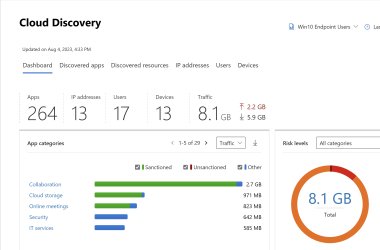
Proactively Block Cloud Apps (like AI) with Microsoft Defender for Cloud Apps and Defender for Endpoint
Shadow IT remains one of the biggest challenges for security teams. Users access cloud applications daily without IT…

Microsoft Sentinel data lake: implementation guide
What is Microsoft Sentinel data lake Microsoft Sentinel data lake is a purpose-built, cloud-native security data platform that…
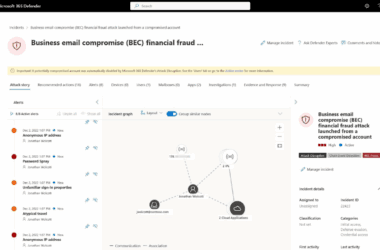
Automatic Attack Disruption in Microsoft Defender XDR
The reality of modern ransomware response Picture this: It’s 2 AM. Your on-call engineer gets an alert about…
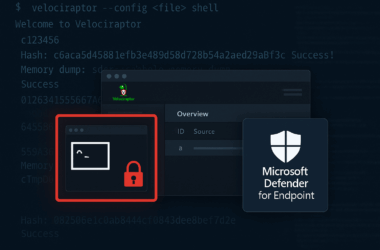
Selective Isolation in Defender for Endpoint – Combining tools like Velociraptor for DFIR
With the introduction of Selective Isolation, Microsoft Defender for Endpoint has taken a significant step toward more flexible…
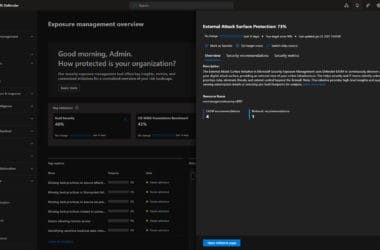
Integrating Microsoft Defender EASM with Exposure Management
Microsoft has taken another step in closing the gap between internal risk and external exposure. With the June…

Automatically tagging MITRE techniques with AI in SOC Optimization
Mapping security detections to the MITRE ATT&CK framework is crucial for understanding adversary behavior and improving threat response.…

Stopping malicious Browser Extensions with Microsoft Defender TVM and Intune
Browser extensions have quietly evolved into one of the most dangerous and overlooked attack vectors in modern enterprise…

Case management in Microsoft Defender and Sentinel: streamline your SecOps
Managing complex security incidents has always been a challenge for Security Operations Centers (SOCs). From correlating alerts to…

OAuth attacks: How to detect and mitigate with Microsoft App Governance (MDA)
OAuth (Open Authorization) has transformed enterprise security by enabling seamless authentication and authorization between cloud applications. However, it…